Before Drinking Became a Performance, There Was Brandy.
It wasn't exotic. It wasn't rare. It wasn't rushed.
Brandy sat at the intersection of agriculture and patience. It was what happened when fruit was allowed to become more than fresh, more than fermented. The orchard, distilled and slowed, carried forward through time.
In early America, brandy wasn't for special occasions. It was for evenings.
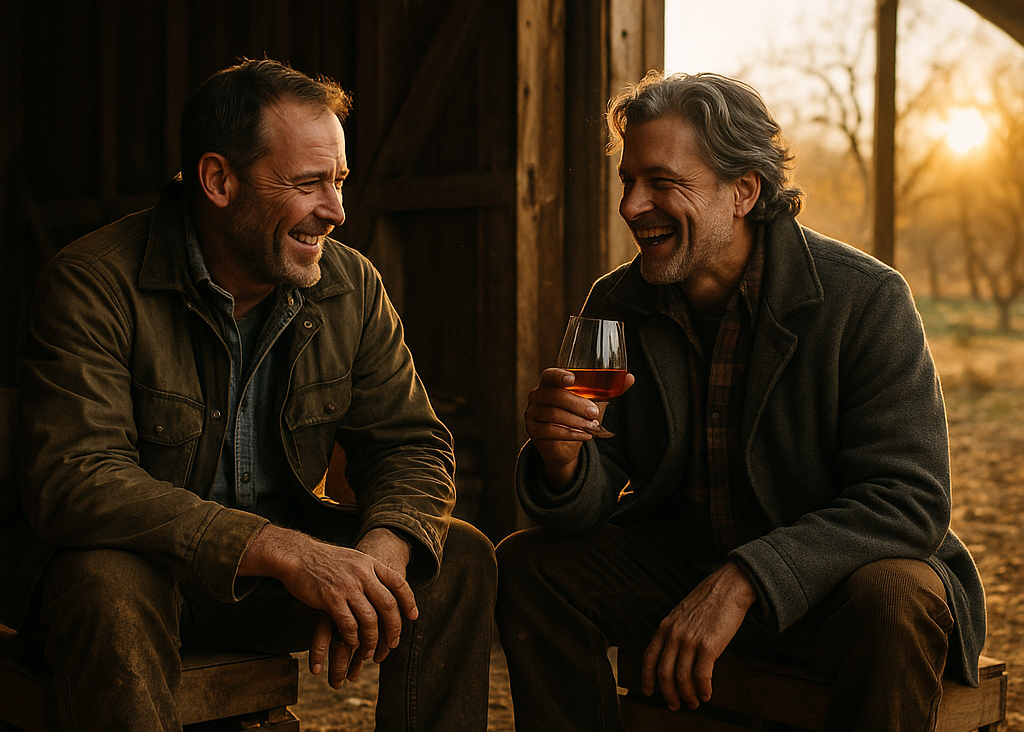
It appeared after work, not before. Poured in small amounts, not to be consumed quickly but to be returned to. A glass could last the length of a conversation, the turning of light, the cooling of a room. Drinking was seated, social, deliberate.
This is what made brandy different.
Unlike grain spirits that prioritized immediacy, brandy required waiting. Fruit had to be harvested, fermented, distilled, and then left alone. Time wasn't an accessory to quality. It was the condition for it.
In that sense, brandy was America's original slow sip.
It asked something of the drinker: patience, attention, restraint. It rewarded presence over excess. It fit naturally into a culture shaped by orchards, long seasons, and an understanding that some things diminish when hurried.
Over time, brandy's role changed.
As American drinking culture accelerated, brandy got pushed to the margins. Whiskey moved faster. Cocktails grew louder. Speed replaced composure. Brandy, unwilling to compete on immediacy or intensity, became miscast as either an old fashioned afterthought or an imported luxury disconnected from its American roots.
What got forgotten wasn't the liquid. It was the posture.
Brandy was never meant to shout. It was meant to sit.
Stillbound returns to brandy with that original posture intact.
Not as nostalgia. Not as revival. As recognition.
American brandy doesn't need reinvention. It needs recentering. It belongs at the table, in the evening, in moments where time expands instead of collapsing. It belongs in the quiet spaces where conversation deepens and the bottle gets opened without urgency.
This is the context in which brandy again makes sense.
And it's why Stillbound pairs brandy with pommeau.
Where brandy represents the original slow sip (structured, aged, patient) pommeau offers its next expression. A gentler cadence. The same orchard, the same respect for time, expressed without burn or consequence. Together, they restore a continuum that once defined American drinking culture.
One isn't a substitute for the other. They're part of the same sentence.
Before America learned to drink fast, it drank deliberately. Brandy is where that discipline began.
And it's where the slow sip still belongs.